
General Articles
10 Signs Your Instrument Needs Professional Maintenance
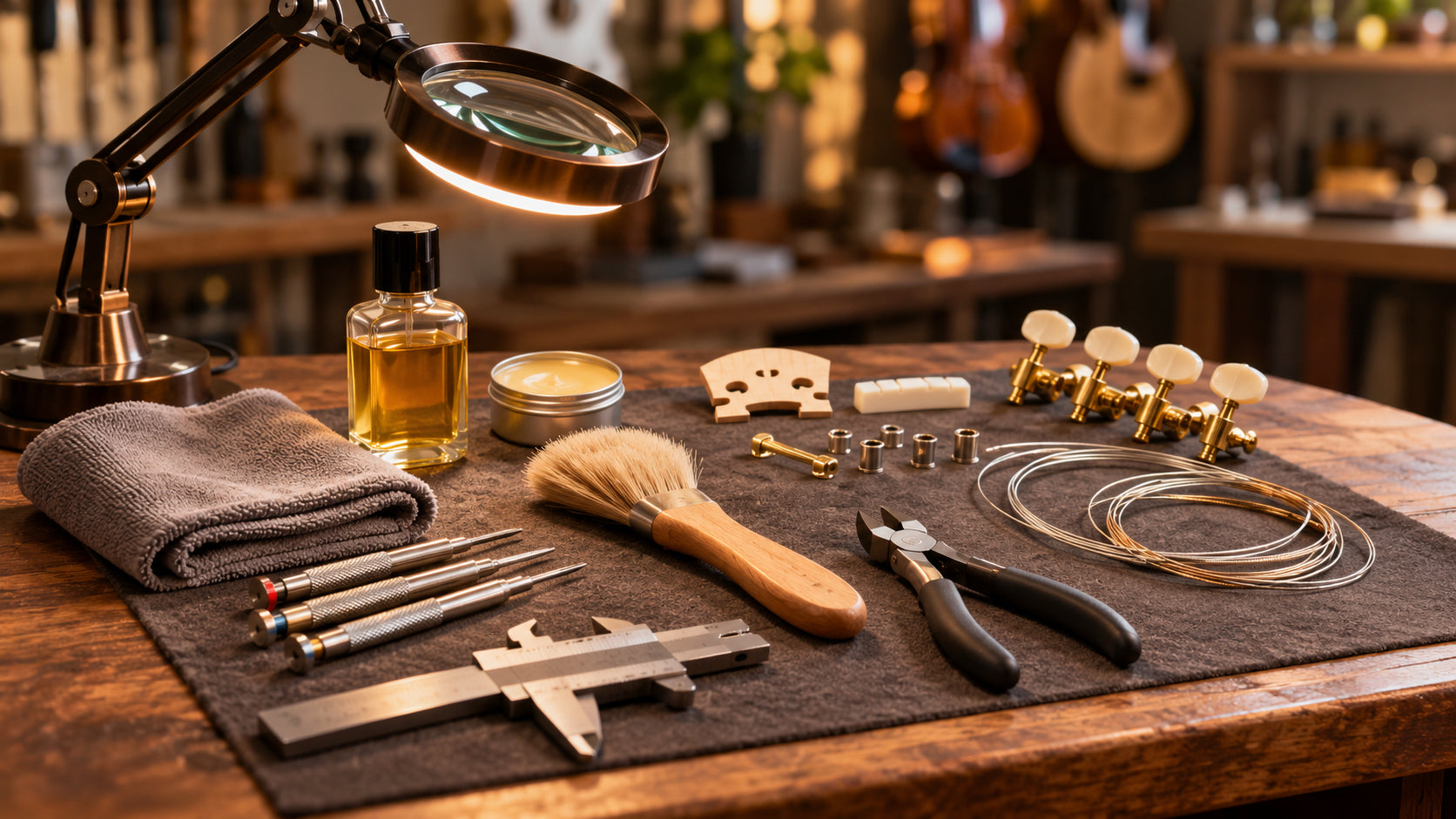
Musicians become familiar with the sound, feel and responsiveness of their instruments over time. Even minor changes in performance can become noticeable, particularly for individuals who practise regularly. However, it is not always easy to determine whether these changes are caused by playing technique, normal wear or an underlying mechanical problem.
Professional musical instrument maintenance becomes particularly important when routine cleaning, tuning and basic care no longer resolve recurring issues. Ignoring these warning signs can allow relatively minor problems to develop into more expensive repairs.
Whether you play a traditional Persian Tar, Setar, Santur, Kamancheh, Tonbak or another acoustic instrument, understanding the following warning signs can help you make informed decisions about its condition.
1. Your Instrument Constantly Falls Out of Tune
Occasional tuning adjustments are a normal part of playing acoustic instruments. Changes in room temperature, humidity and string condition can all influence pitch stability.
However, an instrument that repeatedly loses its tuning within a short period may require closer examination.
Potential causes include worn tuning pegs, deteriorating strings, unstable bridges or changes in the instrument's wooden structure. In some cases, tuning mechanisms may no longer provide sufficient resistance to maintain the intended string tension.
When Tuning Problems Require Professional Attention
Recently installed strings often require time to settle. If the problem continues after the strings have stabilized, particularly when the instrument is stored in a consistent environment, professional assessment may be appropriate.
Before assuming that a structural problem exists, review the common indicators discussed in our guide on when to replace your instrument strings.
2. Unusual Buzzing or Rattling Sounds
A previously clear note that suddenly develops a buzzing or rattling sound can indicate that something is interfering with normal vibration.
On fretted instruments such as the Tar and Setar, buzzing may occur when a vibrating string contacts an unintended fret or another component. Loose accessories, unstable bridges and damaged components can also generate unwanted vibrations.
On a Santur, unusual sounds may originate from a bridge, string group or another contact point. Because several strings often contribute to the same note, locating the exact source can be challenging.
Identifying the Source of the Noise
Try to determine whether the sound occurs on one note, one string or throughout the instrument's range. Notice whether it appears only when playing loudly or remains present during softer passages.
This information can help a qualified technician identify the problem more efficiently. Avoid applying glue, inserting makeshift supports or adjusting unfamiliar structural components before receiving appropriate guidance.
3. Visible Cracks or Separation in Wooden Components
Wooden instruments naturally respond to changes in their surrounding environment. As humidity fluctuates, wood can expand or contract. Different components may respond at different rates, placing stress on joints and other structural areas.
A small surface mark in the finish is not necessarily the same as a structural crack. Nevertheless, newly appearing cracks, widening gaps and separating joints should be investigated.
Particular attention should be paid to the neck, soundboard, resonating bowl and areas surrounding bridges or other components that experience mechanical stress.
Our article on the effects of humidity on musical instruments explains why environmental stability is particularly important for wooden instruments.
Should You Continue Playing a Cracked Instrument?
If a crack appears structural, continues to widen or affects an area under significant tension, stop playing and seek professional advice. Continuing to use a compromised instrument may worsen the damage.
Do not attempt to force separated components back into position or repair them using household adhesives.
4. The Instrument Has Become More Difficult to Play
An instrument that previously felt comfortable should not suddenly require considerably more physical effort to produce the same results.
String players may notice increased resistance when pressing strings, difficulty producing clean notes or discomfort when performing familiar passages. Percussionists may experience unexpected changes in the response of the playing surface.
These differences can develop gradually, making them difficult to recognize until they begin interfering with regular practice.
Understanding Changes in String Height
The distance between a string and its playing surface influences how much effort is required to produce notes. Changes in neck geometry, bridge position or instrument structure can alter this distance.
Although adjustments may improve playability, the correct solution depends on the instrument's design. Removing material from a bridge or adjusting an unfamiliar component without proper knowledge can create additional problems.
Handcrafted instruments deserve particular attention because their construction and individual characteristics may differ. Our guide to choosing and caring for handcrafted acoustic instruments provides additional background on preserving their condition.
5. A Noticeable Loss of Tone or Projection
Musicians occasionally describe their instruments as sounding unusually dull, weak or lifeless. While the change may be caused by older strings or environmental conditions, persistent tonal deterioration deserves further investigation.
Acoustic instruments depend on the efficient transfer of vibration between their components. When connections become unstable or materials deteriorate, their ability to transmit and radiate sound may change.
A loose bridge, damaged membrane or compromised structural joint can potentially influence resonance and tonal definition.
Comparing Your Instrument's Sound Over Time
Recordings can provide a useful reference when evaluating changes in tone. If you have older recordings made with the same instrument, compare them with a recent performance under reasonably similar conditions.
Keep in mind that microphone placement, room acoustics and playing technique can also affect the recorded sound. A recording alone cannot establish whether a repair is necessary, but it may help communicate your concerns to a technician.
6. Tuning Pegs Have Become Difficult to Operate
Traditional tuning pegs must provide enough friction to hold their position while remaining adjustable. A peg that becomes excessively stiff or repeatedly slips can prevent accurate tuning.
Changes in humidity, wear and poor contact between the peg and its fitting may contribute to these problems.
Forcing a resistant peg can damage the peg itself or the surrounding wooden structure. Similarly, applying unsuitable lubricants may create additional difficulties by reducing the friction necessary for tuning stability.
When tuning pegs consistently fail to operate correctly, a technician familiar with the instrument's construction can determine whether cleaning, fitting, replacement or another adjustment is appropriate.
7. Changes in the Skin or Membrane of Persian Instruments
Several traditional Persian instruments incorporate natural skin membranes. These materials respond to environmental conditions and can experience gradual changes through regular use.
The Tar and Kamancheh use membranes as part of their resonating structures, while instruments such as the Tonbak and certain Daf models use skin as their primary playing surface.
Warning Signs of Membrane Problems
- Visible tears or punctures.
- Separation around the membrane's attachment points.
- Persistent changes in tension under stable environmental conditions.
- Unusual wrinkles or deformation.
- Sudden changes in tonal response.
Natural variations in membrane appearance do not automatically indicate damage. However, significant changes should be assessed by someone experienced with that particular type of instrument.
Proper climate management and instrument storage can help reduce unnecessary stress on these sensitive materials.
Avoid using hairdryers, heaters or other direct heat sources to alter membrane tension, particularly when the instrument's condition is uncertain.
8. Intonation Problems That Cannot Be Resolved Through Tuning
An instrument may produce accurately tuned open strings while sounding noticeably out of tune when playing other notes. This can indicate an intonation problem rather than a simple tuning issue.
On fretted instruments, fret position, bridge geometry and string condition can all influence pitch accuracy. Traditional Persian instruments with movable frets also require an understanding of their intended modal pitch relationships.
Not every interval that sounds unfamiliar to a Western-trained musician represents an intonation problem. Persian music uses characteristic intervals that may intentionally differ from Western equal temperament.
Understanding the musical context described in our guide to the different forms of Persian traditional music can help musicians recognize these distinctions.
If familiar melodies consistently sound incorrect despite appropriate tuning and playing technique, professional assessment may be useful.
9. Signs of Moisture Damage or Deterioration During Storage
Musical instruments can deteriorate even when they are not being played. A poorly controlled storage environment may expose materials to excessive dryness, moisture or repeated temperature fluctuations.
Inspect instruments that have been stored for extended periods before returning them to regular use.
Look for corrosion, discolouration, deformation, damaged case linings and unfamiliar odours. A musty smell may indicate moisture-related contamination, although further inspection is necessary to identify the cause.
Our guide on storing musical instruments safely and effectively outlines important considerations for protecting instruments between practice sessions.
10. The Instrument Has Experienced an Impact or Accident
An accidental fall, transportation incident or impact can damage an instrument even when the exterior appears relatively unaffected.
Internal joints, bridges and other components may shift or become compromised without producing immediately obvious surface damage.
After an accident, examine the instrument without applying unnecessary pressure. Look for changes in alignment, newly appearing cracks and unfamiliar sounds.
If you suspect significant structural damage, avoid bringing the instrument back to full playing tension until a qualified technician has assessed it.
What Maintenance Can Musicians Perform at Home?
Although complex repairs require appropriate expertise, musicians can perform several routine tasks to help preserve their instruments.
- Remove dust and surface residue using a suitable soft cloth.
- Inspect strings for visible wear and corrosion.
- Monitor the temperature and humidity of the storage environment.
- Check protective cases for damage or moisture.
- Observe whether tuning stability and playability have changed.
- Follow instrument-specific care instructions provided by the maker.
Developing consistent habits is one of the simplest ways to prevent avoidable problems. Learn more about the importance of regular instrument maintenance and its relationship with long-term performance.
What Should You Tell an Instrument Repair Specialist?
Providing clear information about the problem can make professional assessment more productive.
Explain when the issue first appeared, whether it developed gradually or suddenly, and whether particular notes or playing techniques make it more noticeable. Mention recent string replacements, environmental changes, transportation incidents or previous repair attempts.
Photographs and short recordings may also be useful, especially if the problem occurs intermittently.
For traditional Persian instruments, seek a specialist who understands the relevant construction methods and musical requirements. An adjustment suitable for one type of string instrument may be inappropriate for another.
Frequently Asked Questions
How often should a musical instrument be professionally inspected?
The appropriate interval depends on the instrument, its age, frequency of use and storage conditions. Instruments used heavily or exposed to frequent transportation may benefit from more regular inspections. Persistent changes in sound or playability should be investigated regardless of the previous inspection date.
Can worn strings cause symptoms similar to structural damage?
Yes. Worn strings can contribute to dull tone, tuning instability and inconsistent response. However, replacing strings will not correct damaged joints, structural deformation or other mechanical problems.
Is repairing an older instrument always worthwhile?
Not necessarily. The decision depends on its condition, craftsmanship, sentimental significance, replacement cost and estimated repair expenses. Professional assessment can help establish whether restoration is practical.
Protecting Your Instrument for Years to Come
Recognizing the early warning signs of instrument deterioration can help protect both its musical capabilities and long-term value. Paying attention to changes in tone, tuning, physical condition and playability allows musicians to respond before problems become more serious.
Good maintenance does not require constantly adjusting your instrument. Instead, it involves understanding its normal characteristics, following appropriate care practices and knowing when professional assistance is necessary.
Explore traditional instruments and musical accessories at Rhythm Music Shop in Markham, Ontario, serving musicians across Richmond Hill, Vaughan, North York, Scarborough and the Greater Toronto Area.
For additional educational resources on instrument care, construction and playing techniques, visit our music articles and educational blog.